How To Start Budgeting
Budgeting is not a financial crash diet. It is not about depriving yourself of every latte, canceling dinner with friends, or living in an empty apartment eating plain ramen. When done correctly, a budget is simply an intentional spending plan that gives you guilt-free permission to spend money on what actually matters to you while quietly building your wealth in the background.
If you have ever reached the end of the month and wondered where your hard-earned paycheck vanished, you are not alone. Over 60% of Americans live paycheck to paycheck, including a significant percentage of six-figure earners. The problem is rarely a lack of income; it is the absence of a clear, automated allocation system. Without a plan, money leaks out through subscription creep, impulse shopping, and surprise expenses.
This comprehensive, step-by-step guide will walk you through building your very first workable budget from scratch. We will audit your real cash flow, match you with the right budgeting framework, tame unpredictable expenses, and automate your finances so your money starts working for you—not the other way around.
📌 The 5 Golden Rules of Budgeting That Actually Works
1. Base your numbers on net pay (what actually hits your checking account, not your gross salary).
2. Cover the “Core Four” first (shelter, utilities, basic groceries, and essential transportation).
3. Build a $1,000 starter buffer in a High-Yield Savings Account (HYSA) before making aggressive financial moves.
4. Plan for irregular bills using monthly “sinking funds” so annual expenses never feel like emergencies.
5. Give yourself guilt-free fun money to keep your budget sustainable over the long haul.
Phase 1: The 60-Day Financial Reality Audit
Before you can decide where your money should go, you need an honest, judgment-free snapshot of where it is currently going. Most beginners make the mistake of creating an aspirational budget based on how they wish they spent money. That approach almost always falls apart by day fourteen. Instead, we start with hard data.
Step 1.1: Calculate Your Real Net Take-Home Pay
Your gross salary looks impressive on an offer letter, but you cannot pay your rent with money you never received. Your starting budget number must always be your net take-home pay—the exact dollar amount deposited into your checking account after all deductions.
These payroll deductions typically include:
- Federal, State, and Local Income Taxes: Mandatory withholdings determined by your W-4 form.
- FICA Taxes: Mandatory 6.2% Social Security and 1.45% Medicare contributions.
- Pre-Tax Benefits: Employer-sponsored health, dental, and vision insurance premiums.
- Pre-Tax Retirement Contributions: Traditional 401(k) or 403(b) contributions, as well as Health Savings Account (HSA) or Flexible Spending Account (FSA) allocations.
Also, pay close attention to your pay frequency schedule:
- Bi-Weekly (Every 2 Weeks): You receive 26 paychecks per year. That means 10 months have two paychecks, and two “magic” months have three paychecks. Build your base monthly budget around two paychecks, treating the third paycheck as an instant bonus for savings or debt payoff.
- Semi-Monthly (Twice a Month): You receive 24 paychecks per year, typically on the 1st and 15th (or 15th and last business day). Your monthly income remains identical every month.
- Weekly (Every Week): You receive 52 paychecks per year. Multiply your average weekly paycheck by 4.33 to calculate your baseline monthly cash flow.
⚠️ Beware: The “Gross Income Trap”
If you earn a $60,000 annual salary, your monthly gross pay is $5,000. However, after taxes, insurance, and a modest 5% 401(k) contribution, your actual monthly deposit might only be $3,650. Writing a budget based on $5,000 creates an immediate $1,350 phantom deficit that guarantees failure before you even start.
Step 1.2: The 60-Day Transaction Lookback
Log into your online bank and credit card accounts and download your statements for the last 60 days. Open a clean spreadsheet or grab a notebook and categorize every single transaction into one of two buckets:
- Fixed Expenses: Bills that remain virtually identical every billing cycle (rent/mortgage, auto insurance, internet, car payment, student loan minimums, gym membership).
- Variable Expenses: Costs that fluctuate depending on your choices and lifestyle (groceries, restaurant meals, gas, rideshares, clothing, personal care, entertainment).
Step 1.3: Uncover “Phantom Spending” and Subscription Creep
As you review your statements, highlight recurring micro-transactions. It is easy to ignore a $9.99 streaming app, a $4.99 cloud storage upgrade, or an annual $119 subscription renewal, but together they quietly drain hundreds of dollars per month. List every active subscription, cancel the ones you have not used in the last 30 days, and total up what is left. This forms your real baseline spending.
Phase 2: Choose Your Budgeting Framework
There is no single “correct” way to budget. The best budgeting system is the one you can stick with consistently for six months without wanting to tear your hair out. Here are the four proven budgeting frameworks used by personal finance experts:
1. The 50/30/20 Rule (The Balanced Baseline)
Created by Senator Elizabeth Warren, this method divides your net take-home pay into three broad percentages.
- 50% for Needs: Essential living expenses (housing, utilities, groceries, transportation, minimum debt payments, health insurance).
- 30% for Wants: Discretionary lifestyle spending (dining out, streaming services, concerts, travel, hobbies).
- 20% for Savings & Extra Debt Payoff: Building an emergency fund in an HYSA, investing for retirement (Roth IRA), and paying down high-interest credit card debt.
Best for: Beginners, busy professionals, and anyone who wants financial structure without tracking every coffee purchase.
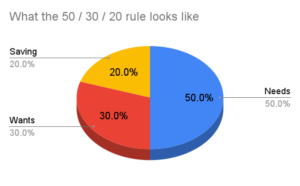
What 20/30/50 budget looks like as a pie
Read more: The 50/30/20 Budget: A Beginner’s Guide to Stress-Free Money Management
2. Zero-Based Budgeting (The Precision Plan)
Popularized by financial author Dave Ramsey and software like YNAB (You Need A Budget), Zero-Based Budgeting assigns every single dollar a specific job until your income minus your planned allocations equals exactly zero: Income - Expenses - Savings = $0.
If your monthly take-home pay is $4,000, all $4,000 is distributed across fixed bills, variable categories, sinking funds, debt payoff, and savings. Not a single dollar is left floating aimlessly in your checking account.
Best for: Aggressive debt elimination, analytical personalities, and anyone who feels their money constantly slips through their fingers.
Read More: Zero Based Budgeting
3. Pay-Yourself-First / Reverse Budgeting (The Minimalist Route)
Instead of categorizing every line item, you immediately divert your target savings and investment amount out of your paycheck the day you get paid (e.g., sending $600 to an HYSA and a Roth IRA). Once your fixed bills and savings are covered, you are completely free to spend whatever balance remains in your checking account on whatever you want, guilt-free.
Best for: People who hate tracking daily receipts and simply want to ensure their future is funded without micro-managing line items.
Read more: Pay Yourself First
4. The Envelope System / Digital Cash-Stuffing
This classic method involves setting strict cash spending limits for high-risk categories like groceries, dining out, and entertainment. You withdraw physical cash on payday and place it into labeled envelopes. Once an envelope is empty, spending in that category stops completely until the next month. Modern digital equivalents use separate checking sub-accounts or debit cards with balance alerts.
Best for: Chronic overspenders, people breaking a credit card dependence, and hands-on tactile learners.
Read More: Envelope Budgeting in the Cashless Age
💡 Free Tool: Download Our Starter Budgeting Spreadsheet Pack
Not sure where to start? Grab our free TalkBudget Starter Spreadsheet Pack. It includes automated templates for both the 50/30/20 Rule and Zero-Based Budgeting in Google Sheets and Microsoft Excel format. Simply plug in your income and the formulas handle the math automatically. Find it at the end of the article!
Phase 3: Step-by-Step Construction of Your First Monthly Budget
Now it is time to build your actual numbers. Whether you are using a spreadsheet, an app, or a notebook, follow this sequential hierarchy to assemble your spending plan:
Step 3.1: Secure the “Core Four” Non-Negotiables First
If you lose your job or experience an unexpected financial emergency, your money must protect four essential pillars before anything else:
- Shelter: Rent or mortgage payment, HOA fees, and property taxes. Aim to keep housing costs under 28–30% of your net take-home pay whenever possible.
- Utilities: Electricity, natural gas, heating oil, water, sewer, and a basic mobile phone/internet plan.
- Basic Food: Nutritious, home-prepared groceries. Exclude fancy restaurant meals, daily work lunches, and high-end delivery services from this baseline.
- Essential Transportation: Basic auto loan payment, gasoline, public transit pass, auto insurance, and basic maintenance required to commute to work.
Step 3.2: Build Your $1,000 “Shock Absorber” Cushion
Before putting every spare penny toward aggressive debt payoff or long-term investments, establish an initial $1,000 Starter Emergency Fund. Keep this cash parked in a dedicated, FDIC-insured High-Yield Savings Account (HYSA) separate from your day-to-day checking account.
Why? Because life happens. A blown car tire, a plumbing leak, or an unexpected urgent care co-pay will easily derail a budget if you have no cash reserves, forcing you right back onto high-interest credit cards. This $1,000 buffer turns a financial crisis into a minor inconvenience.
Step 3.3: Master “Sinking Funds” for Irregular Expenses
The number-one reason budgets fail after 60 days is unexpected, non-monthly expenses: semiannual car insurance premiums, annual Amazon Prime renewals, holiday gift shopping, veterinarian checkups, and routine dental cleanings. These are not true emergencies—they are predictable, irregular expenses.
The solution is a sinking fund. Divide the total annual cost by 12 and save that amount every single month:
- Car Insurance ($1,200/year): Save
$100/monthinto your HYSA sinking fund. - Holiday Gifts ($600/year): Save
$50/monthstarting in January. - Home & Car Maintenance ($1,200/year): Save
$100/monthfor routine tune-ups and repairs.
When the bill arrives in October or December, the money is already sitting in your savings account waiting to be spent.
Step 3.4: Protect Your Guilt-Free “Fun Money”
A budget that allows zero fun is doomed from day one. Humans are not spreadsheets; if you build a plan with 0% allocated for recreation, you will eventually burn out and go on an impulsive spending binge. Earmark a dedicated 5% to 10% of your net pay for pure discretionary fun—video games, nice dinners, concert tickets, craft coffee—with zero guilt attached.
Phase 4: Overcoming Real-World Budgeting Roadblocks
A budget on paper is easy; keeping it on track in the real world is where the challenge lies. Here is how to navigate the three most common roadblocks that derail beginner budgets:
Roadblock 1: Budgeting on an Irregular or 1099 Freelance Income
If you are a gig worker, freelancer, real estate agent, or commission-based sales rep, your monthly income fluctuates constantly. Creating a standard static budget based on your best earning month will quickly lead to cash shortfalls during slower periods.
Use the “Holding Tank” Baseline Strategy:
- Determine Your Bare-Bones Baseline: Calculate the minimum monthly cost required to cover your Core Four and minimum debt payments.
- Budget Off Your Worst Month: Look back at your lowest-earning month over the past year. Use that lower figure as your standard monthly spending cap.
- Establish a Tax & Income Buffer Account: Open a dedicated secondary checking or savings account. All client payments land here first. Pay your living expenses like a fixed salary from this account into your personal checking. In fat months, leave the surplus in the holding tank to cushion the lean months.
ℹ️ The 1099 Tax Reserve Rule
If you receive 1099 independent contractor income, no taxes are withheld from your gross checks. Automatically transfer 25% to 30% of every single client payment into a separate savings account reserved exclusively for estimated quarterly IRS and state tax payments. Never include this tax reserve in your spendable household budget.
Roadblock 2: What to Do When Expenses Exceed Income
When you complete your audit, you might discover that your expenses are larger than your paycheck. If your math reveals a monthly deficit, activate the Budget Triage Protocol:
- Level 1 (Immediate Pauses): Temporarily pause all extra debt principal payments and non-essential savings until cash flow is positive. Pay only the minimum balances due on credit cards and personal loans to protect your FICO score.
- Level 2 (Discretionary Slash): Eliminate dining out, cancel unused streaming apps and gym memberships, and meal-plan strictly around grocery store sales.
- Level 3 (Fixed Cost Renegotiation): Call your auto insurance provider to shop your rate or raise your deductible. Call your internet provider to negotiate promotional pricing or drop unnecessary speed tiers. Shop around for lower-cost mobile carriers (like MVNOs).
- Level 4 (Income Acceleration): If structural expenses (like high rent) cannot be immediately cut, bridge the gap with short-term overtime, freelance gig work, or selling unused household items while planning a longer-term career or housing pivot.
Roadblock 3: The Mid-Month Overspend
What happens when you budget $300 for groceries but end up spending $410 by the 20th of the month? Do not abandon your entire budget! Budgeting is a dynamic, living system, not a rigid test of perfection.
Follow the “Roll With the Punches” Principle: When you overspend in one category, balance the ledger by reducing another category. Take $60 from your dining out line and $50 from your clothing or entertainment line to cover the grocery overage. As long as your total monthly outflow remains within your total net take-home pay, your budget is successful.
Phase 5: Automation, Tooling, and Your 15-Minute Maintenance Routine
Manual budgeting fails when it becomes exhausting. The secret to sustaining a budget for years is setting up automated systems that handle the heavy lifting while you live your life.
Step 5.1: Build Your Payday Automation Pipeline
Set up automatic transfers through your employer’s direct deposit or via your bank’s recurring transfer settings to route your income the morning your paycheck arrives:
- 70% remains in your primary Checking Account for bills, groceries, and daily living.
- 15% auto-transfers to your High-Yield Savings Account (HYSA) for emergency funds and sinking funds.
- 10% auto-transfers to your Roth IRA / Brokerage Account for long-term compound growth.
- 5% auto-transfers to a Secondary Discretionary Checking Account for your guilt-free spending debit card.
✅ The Power of Payday Automation
By automating your savings and bill allocations the exact morning your paycheck lands, you remove willpower from the equation. You will naturally adapt your spending to whatever balance remains in your primary checking account without feeling restricted.
Step 5.2: The 15-Minute “Weekly Money Date”
You do not need to log transactions every day. Set a recurring 15-minute calendar invite every Sunday evening or Monday morning to complete this quick checklist:
- Review Account Balances: Check your primary checking and HYSA balances to ensure all expected deposits cleared.
- Reconcile Recent Transactions: Categorize any unassigned expenses in your spreadsheet or budgeting app.
- Check High-Risk Categories: Look at your grocery and entertainment balances for the remaining days in the month.
- Preview Upcoming Calendar Events: Scan your calendar for the upcoming week (birthdays, work trips, dinners out) and make minor category adjustments proactively.
Read More: Sticking to a Budget
Phase 6: Your 7-Day Budgeting Action Plan
Building a solid financial foundation does not require a full weekend of stress. Take it one simple step at a time over the next seven days:
Join TalkBudget & Get Your Free Pack
Get our free 50/30/20 & Zero-Based templates instantly, plus practical money tips in your inbox.
By subscribing, you agree to receive email updates from TalkBudget. Read our Privacy Policy. Esily unsubscribe anytime in 1 click.
Editorial Disclaimer: TalkBudget provides general educational content and is not a registered financial advisor or CPA. Please consult a qualified professional before making major financial decisions.
6 Responses to How To Start Budgeting